DIY Turf Cleaning

Turf Sweeper/Vac

Foam Cannon/Sprayer

Water Broom

Enzyme Spray

UNCHAINED Formula

DIY Turf Cleaning Tips: What to Do & How to Do It

Learn how to clean your artificial turf using affordable, easy-to-find products from your local hardware store, pet supply shop, or home improvement center. This step-by-step guide walks you through the same proven methods most turf cleaning companies use—without the expensive service fees.

From removing pet odors and lifting stains to sanitizing turf and preventing bacteria or mold, you’ll get simple, effective solutions that work. We’ll show you which non-toxic, eco-friendly cleaners deliver the best results, how to use them safely, and tips for keeping your turf looking fresh year-round. With the right techniques and the right store-bought products, you can achieve professional turf cleaning results for a fraction of the cost—saving you money while extending the life of your artificial grass.
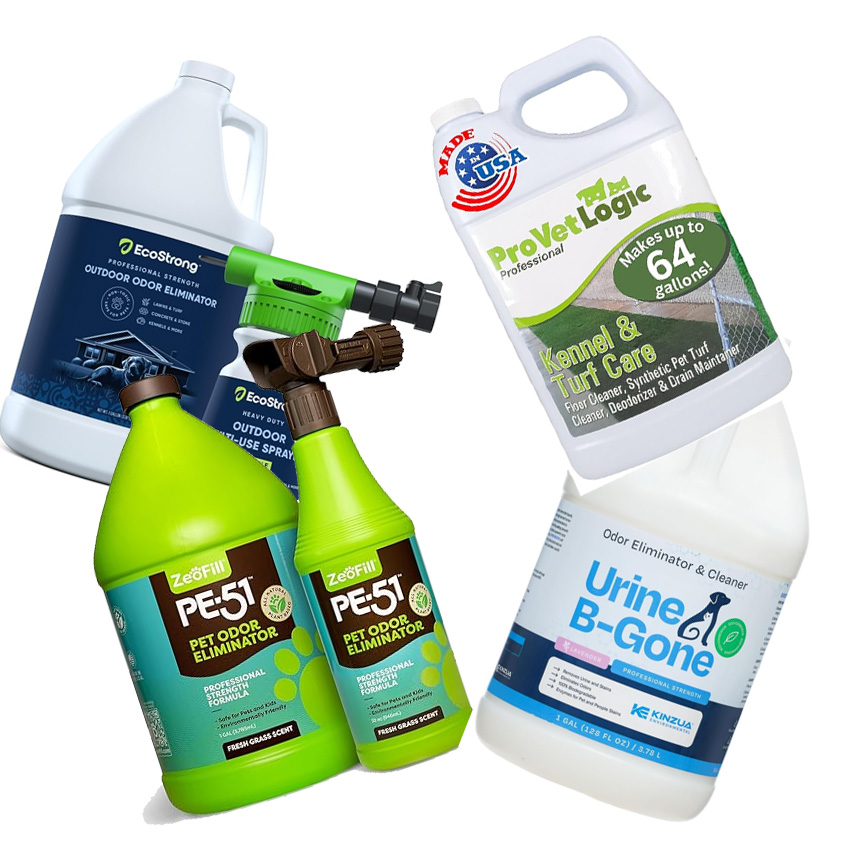
NOTE: The tools and sprays shown here use the exact same techniques that 99.9% of turf cleaning companies rely on. This method is extremely simple to do yourself, so there’s no need to spend money hiring someone for this type of cleaning. If you’re looking for true professionals who perform deep extraction turf cleaning—the only way to fully clean and sanitize turf—click on the Turf Cleaning Companies tab. There, you’ll find the top companies that use the proper extraction method for lasting results and to clean your turf correctly.

Turf Sweeper/Vac

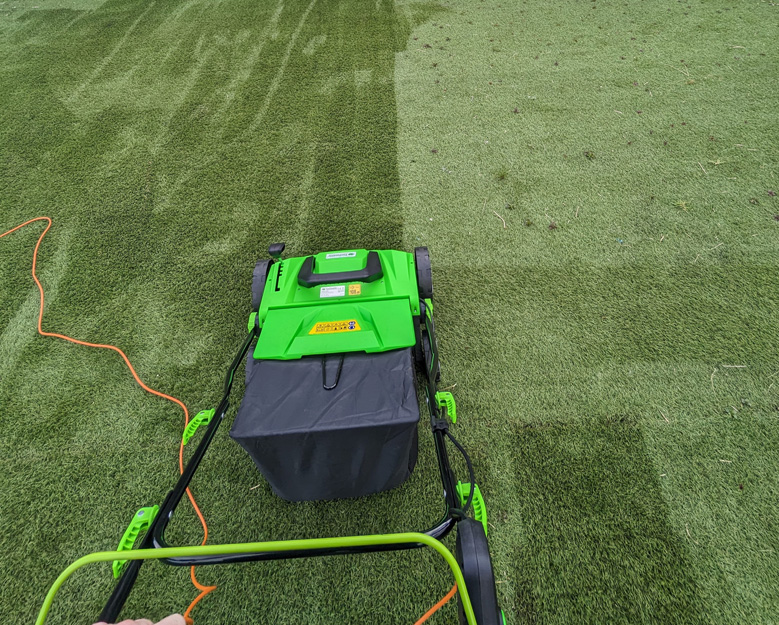
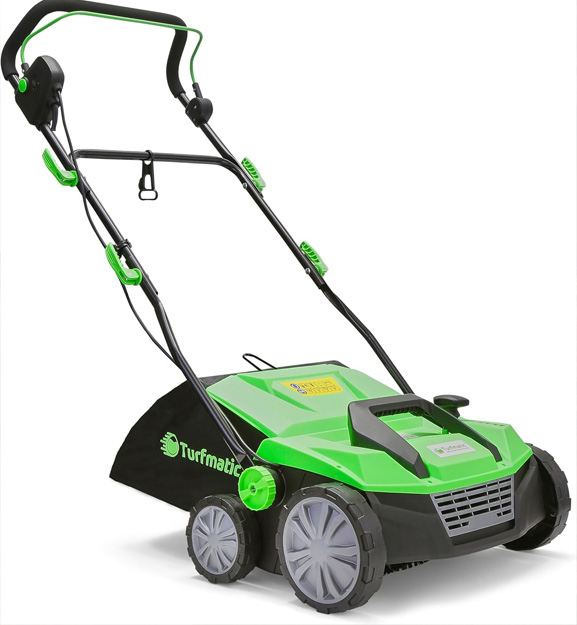
The Turfmatic and similar machines are electric turf sweepers and power brooms designed to keep artificial grass looking and performing its best. These tools use adjustable Astrospiral nylon brushes to gently lift and separate flattened turf fibers, restoring that fresh, upright appearance that makes synthetic grass look brand new. They also sweep away debris such as leaves, twigs, moss, and pet hair, preventing buildup that can lead to odors, weed growth, and drainage problems.

By removing dirt and organic matter before it has a chance to settle deep into the infill, the Turfmatic not only improves the look of your turf but also extends its lifespan. Perfect for both residential and light commercial use, these machines make turf maintenance easy, eco-friendly, and effective—helping you enjoy clean, vibrant, and long-lasting artificial grass with minimal effort.

How to use the Turfmatic

How to Use the Turfmatic Turf Sweeper / Power Broom

  1. Inspect the Turf First

    • Remove any large debris like sticks, rocks, or toys by hand.

    • Check for damaged seams or loose edges before starting.

  2. Set the Brush Height

    • Adjust the Astrospiral nylon brushes so they just touch the turf fibers without digging into the backing.

    • Lower for heavily matted turf, higher for routine maintenance.

  3. Plug In & Power On

    • For electric models, connect to a power source.

    • For battery or gas-powered versions, ensure they are charged or fueled.

  4. Work in Sections

    • Push or guide the Turfmatic slowly in straight lines, overlapping slightly for even coverage.

    • For stubborn flattened spots, make multiple passes from different directions.

  5. Collect Debris (if using the Turfmatic 380 with collection bin)

    • Empty the debris collector as needed to maintain efficiency.

  6. Edge & Detail

    • Use the edge-to-edge cleaning feature (Turfmatic 600) to clean against borders, walls, and fence lines.

  7. Final Check

    • Inspect the turf for even lift and debris removal.

Shop Now

Foam Cannon/Sprayer

A foam sprayer or foam cannon is a cleaning tool that mixes water, air, and a concentrated cleaning solution to create a thick layer of foam that clings to surfaces. The foam helps loosen dirt, grime, and contaminants so they can be rinsed away more easily.

There are two main types:

  • Foam Cannons for Pressure Washers – Attach to a pressure washer’s wand to produce dense, high-pressure foam. Ideal for deep cleaning cars, siding, boats, and even artificial turf.

  • Foam Sprayers / Foam Guns for Garden Hoses – Connect directly to a standard garden hose. They create lighter foam but are quick and convenient for smaller jobs or when you don’t have a pressure washer.

In turf cleaning, foam sprayers are great for applying pet odor treatments, disinfectants, or eco-friendly turf shampoos evenly across the surface so the cleaner can soak into the fibers and infill before rinsing or extraction.

If you want, I can also write you a short, turf-focused product description that makes foam sprayers sound essential for any turf owner.

How to use a foam cannon or sprayer?

How to Use a Foam Sprayer (Foam Cannon/Gun)

Mix water, air, and cleaner to create clinging foam that loosens dirt and odors. Use these steps for vehicles, patios, and artificial turf.

Choose Your Foam Sprayer

  • Pressure Washer Foam Cannon: Thickest foam; attaches to a pressure washer.
  • Garden Hose Foam Gun: Simple setup; lighter foam, works with a standard hose.
  • Hand-Pump Foamer: Portable; good for small areas or spot cleaning.

What You’ll Need

  • Foam sprayer (cannon, hose gun, or hand-pump)
  • Cleaning solution (turf-safe enzyme/odor neutralizer or general foaming cleaner)
  • Fresh water
  • Pressure washer or garden hose (unless using a hand-pump)
  • Measuring cup; optional funnel

Step-by-Step Instructions

  1. Pick the sprayer type.Choose based on foam thickness (pressure washer), convenience (hose), or portability (hand-pump).
  2. Mix the solution.Fill the bottle with water first, then add cleaner per its label (commonly about 1–2 oz per gallon). Cap and swirl gently.
  3. Connect and adjust.Attach the sprayer. Set the mix ratio dial and the spray pattern. Start mid-range; narrow for reach, wide for coverage.
  4. Apply the foam.Foam from the top down. Let it dwell for 3–10 minutes so the chemistry can work. Do not let it dry; re-mist if needed.
  5. Rinse thoroughly.Rinse with clean water. For turf, flush deeply so residue doesn’t remain in the infill or base.

Pro Tips for Turf

  • Use an enzyme/oxidizer formulated for artificial grass and pet odors.
  • Aim for foam that clings without puddling to ensure even coverage.
  • On hot days, work early or late to prevent rapid drying.

Safety & Care

  • Follow the cleaner’s label and test a small area first.
  • Keep chemicals away from children and pets; avoid runoff into ponds.
  • Never mix bleach with acids or ammonia.
Shop Now

Water Broom

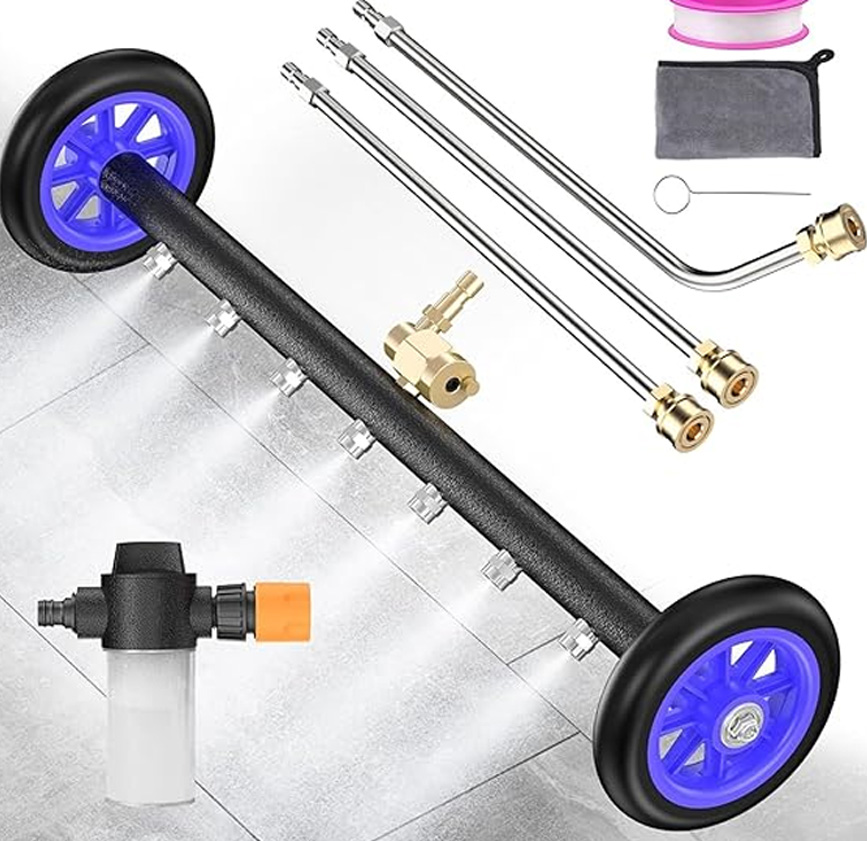
A water broom is a cleaning tool designed to quickly rinse large flat surfaces by delivering multiple streams of water in a wide, even path. Instead of using a single concentrated spray like a typical nozzle, a water broom features a horizontal spray bar with several evenly spaced nozzles, mounted on wheels so it can be rolled smoothly across the surface. As you push it, the jets of water “sweep” debris away—similar to a broom, but using water pressure instead of bristles.

How It Works

Water brooms connect to either a garden hose for light-duty rinsing or a pressure washer for higher-powered cleaning. The width of the spray bar typically ranges from 12 to 48 inches, allowing you to cover more ground in less time.

Common Uses

  • Artificial Turf: Quickly rinsing off pollen, dust, pet waste residue, and cleaning solution without disturbing the infill or flattening fibers.
  • Driveways & Sidewalks: Removing dirt, sand, and loose debris in wide strips.
  • Patios, Turf, Pool Decks, & Tennis Courts: Clearing leaves, grass clippings, and other light debris.

Advantages

  • Faster cleaning times across wide areas.
  • Even water coverage for consistent rinsing.
  • Gentler on delicate surfaces than a pinpoint spray tip.
  • Often more water-efficient by avoiding over-saturation in one spot.

Limitations

  • Primarily for rinsing and surface-level cleaning.
  • Not a replacement for deep cleaning tools (e.g., scrubbers or extraction systems).
  • Stubborn stains, algae, or embedded grime may require pre-treatment or different methods.

Bottom Line

A water broom is an excellent maintenance tool for keeping large outdoor surfaces—especially synthetic grass—clean and free of loose debris with minimal effort and time.

How to use a water broom?

1. Connect the Water Broom

  • Garden hose: Screw the connector onto your hose bib or quick-connect fitting.
  • Pressure washer: Attach the broom to the wand using the correct adapter.

2. Set the Water Pressure

  • Garden hose models: Turn the water on fully.
  • Pressure washer models: Use the broom’s rated PSI (often 1500–3000). Avoid excessive pressure on delicate surfaces.

3. Start at the Highest Point

Begin at the highest area of the surface so water and debris flow away from you.

4. Push in Overlapping Passes

Push forward like a broom. Overlap each pass slightly so you do not miss spots. Keep the broom moving, especially on turf, to avoid damaging fibers or displacing infill.

5. Work in Sections

Divide the area into small zones and complete one section at a time for even coverage.

6. Do a Final Rinse (Optional)

After cleaning, a light rinse can help remove remaining dust or streaks.

Pro Tip for Turf

A water broom is great for loose debris and light dust, but it will not deep clean or remove pet odors. For sanitizing and odor removal, use a dedicated turf cleaner and proper extraction.

Shop Now

Enzyme Spray

An enzyme sprayer for turf is a tool used to apply enzyme-based cleaning solutions onto artificial grass
to help control odors and break down organic waste. These sprayers can be hose-end sprayers, pump sprayers,
backpack sprayers, or foam sprayers—and they don’t have to be designed specifically for turf. Almost any sprayer
that can evenly apply an enzyme cleaner will work.

How It Works

The power comes from the enzyme solution itself. Enzyme cleaners use natural enzymes and beneficial bacteria
to break down organic matter such as dog urine, feces residue, vomit, food spills, and other odor-causing waste.
Instead of masking smells with fragrance, they break down the source of the odor at a molecular level.

Important Note

Using an enzyme sprayer can quickly make turf smell fresher, but this is often a temporary band-aid.
If urine has soaked into the turf’s infill and base layer, the smell will return because the source hasn’t been
fully removed. Deep cleaning and extraction are required to truly eliminate it.

Best Practices

  • Apply enzyme cleaner to dry turf so it isn’t diluted immediately.
  • Allow the product to dwell for the manufacturer’s recommended time.
  • Rinse lightly if directed on the label.
  • Pair periodic enzyme treatments with professional deep extraction for long-lasting results.

How to use an Enzyme Spray?

1. Choose the Right Enzyme Cleaner

Pick a high-quality, pet-safe enzyme cleaner. It does not need to be turf-specific—many general pet odor
enzyme cleaners will work.

2. Pick Your Sprayer Type

  • Hose-end sprayer: Connects to your garden hose and mixes as you spray.
  • Pump or backpack sprayer: Allows manual control over concentration and coverage.
  • Foam sprayer: Creates foam for longer dwell time on the surface.

3. Prep the Turf

Remove solid waste and large debris. Make sure the turf is dry so the enzyme solution is not diluted right away.

4. Apply the Enzyme Solution Evenly

Spray in overlapping passes to cover the entire area. Pay extra attention to spots where pets urinate or odors are strongest.

5. Let It Dwell

Allow the product to sit for the recommended time, usually 10–30 minutes, so the enzymes can break down the waste.

6. Rinse or Leave On

Some enzyme cleaners are designed to be left on and work over time, while others should be lightly rinsed after dwell time.

7. Understand It’s a Temporary Fix

Enzyme sprays can quickly freshen turf, but if urine has soaked into the infill or base layer, the smell will return.
Deep cleaning with extraction is needed for long-term odor removal.

Shop Now

Unchained Peroxide Based Formula

Unchained is a line of professional-grade urine stain and odor removal products originally developed for carpet
cleaning professionals and now widely used by homeowners and pet owners. These products are formulated to break
down and eliminate the source of odors—rather than masking them—using high-grade hydrogen peroxide, penetrants,
and odor neutralizers.

Unchained Urine Stain & Odor Eliminator (Spray)

This is a ready-to-use, rinse-free spray designed for quick odor and stain treatment. It uses peroxide, buffers,
and penetrants to target urine at the molecular level. The spray works on carpets, rugs, concrete, tile, grout,
fabrics, clothing, and pet bedding, making it a convenient option when you need fast results without rinsing.

USOR Unchained (Concentrated Liquid)

USOR Unchained is a concentrated cleaner for deeper, set-in stains and stronger odor problems. It combines
hydrogen peroxide with additional odor counteractants and penetrants to aggressively break down yellow pet stains,
neutralize odors, and help brighten the surface. It is often used by professionals and can be boosted alongside
other presprays during heavy-duty cleaning.

Which Should You Use?

Choose the spray for quick, convenient odor control and spot treatments. Choose the concentrated liquid for
heavy-duty cleaning and restoration where odors and stains are deeply embedded. Both products are powerful and
versatile; select based on severity and whether you need ready-to-use convenience or professional-strength
concentration.

How to use an UNCHAINED?

Unchained is a powerful urine stain and odor removal product that can be used on artificial turf, carpets, rugs, tile, and other surfaces.
It can be applied using a foam cannon, pump sprayer, hose-end sprayer, or directly through professional cleaning equipment.
Always follow safety guidelines and wear gloves when handling this product.

Important: We are not responsible for damage, injury, or other issues caused by incorrect use of this product.

1. Identify the Problem Area

Locate urine stains or odor sources. On turf, use good lighting or a UV light to spot hidden contamination.

2. Remove Loose Debris

Pick up solid waste and clear away any loose dirt or debris before applying Unchained.

3. Apply the Product

  • Spray (ready-to-use): Spray directly on the affected area, saturating it fully.
  • Concentrate: Dilute according to the manufacturer’s instructions, then apply with a foam cannon, pump sprayer, or hose-end sprayer.

4. Let It Dwell

Allow the product to sit for 10–30 minutes so it can break down urine crystals and organic matter. Avoid rinsing too soon.

5. Agitate if Needed

For carpets, use a carpet rake or brush. For turf, use a stiff bristle broom or turf brush for even coverage.

6. Rinse or Extract

Some versions are rinse-free. Others work best when extracted with hot water extraction equipment, especially for deep-set odors.

7. Repeat if Necessary

Severe contamination may require multiple applications or a combination of Unchained with a professional deep extraction service.

Shop Now